
Minding the lamination in butter packaging
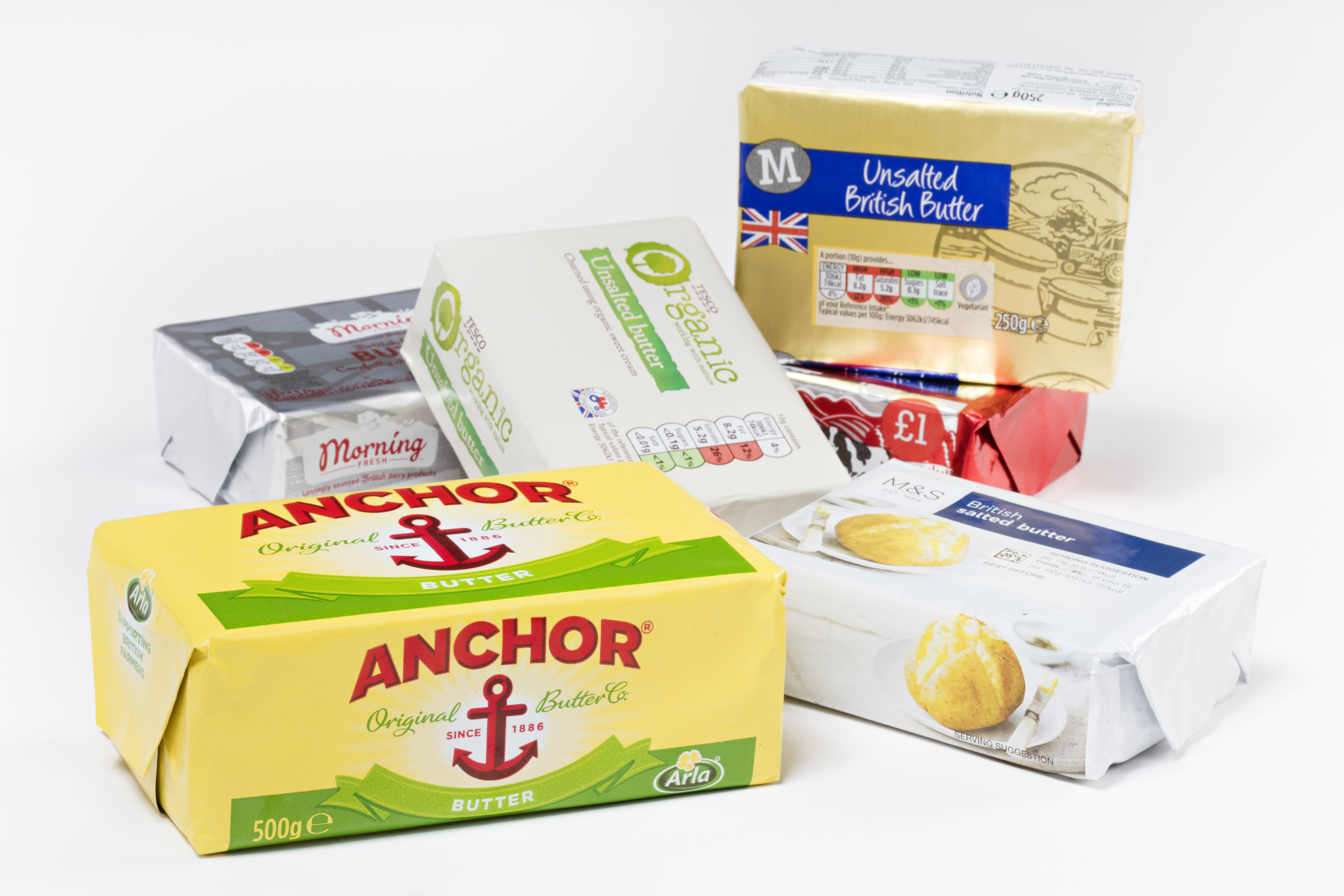
Excellent barrier properties are particularly important for high fat food content. Getting it right for butter is particularly challenging. A recent consumer test in a leading German magazine highlights the fact that you also need to think about the glue with which different layers are combined. If not, the butter may absorb harmful mineral oils.
Butter is greasy stuff, posing high demands on the choice of packaging.
If the barrier in the packaging material fails, grease will leak through, soiling your hands and clothes before you have reached the cashier in your supermarket. Barrier properties must also consider sensitivity to light and the fact that butter contains about 16-18 percent water. To add to the challenge, the package itself needs be foldable.
As if this wasn’t enough, there is still another challenge that comes with potential health hazards. There is a risk that butter absorbs some unwanted components from the wrapping itself. Mineral oil hydrocarbons (knowns as MOHs) are complex chemical mixtures, generally derived from crude oil. They mainly consist of mineral oil saturated hydrocarbons (known as MOSH and mineral oil aromatic hydrocarbons (MOAH).
These mineral oil hydrocarbons may migrate from the packaging to the butter, and a consumer test in the respected Öko-Test magazine, one of the leading magazines in Germany on consumer tests, came back with some alarming results. Out of 18 different brands, only two brands remained under the approved limit for MOAH.
The culprit may lie in the way different material layers are glued together. During the last decades, aluminium-based packaging has been the go-to solution due to its strong barrier properties. The most common way to laminate the aluminium layer with the greaseproof paper that is necessary to hinder leakage, is with using wax lamination.
According to the test, it was found that packaging in wax-laminated aluminium foil made a significant contribution to the MOSH exposure.
“These waxes are based on oil, which poses the risk that some mineral components can migrate into the butter. The closer the butter is to the expiry date, the higher MOSH values can be expected” says Heikki Lumme, Business Line Manager for Flexible Materials at Walki.
However, you do not need to use wax for lamination.
“In our butter packaging, we laminate the aluminium foil with the grease proof paper using polyethylene. This is much safer as there are no MOSH/MOAH components in the material, yet the barrier properties are kept intact”, explains Lumme.
Walki also does the printing of the packaging. No risk of mineral oil migration there either.
“We use water-based inks rather, making them better for our health “