
Recyclable secondary packaging for Laïta’s pancakes
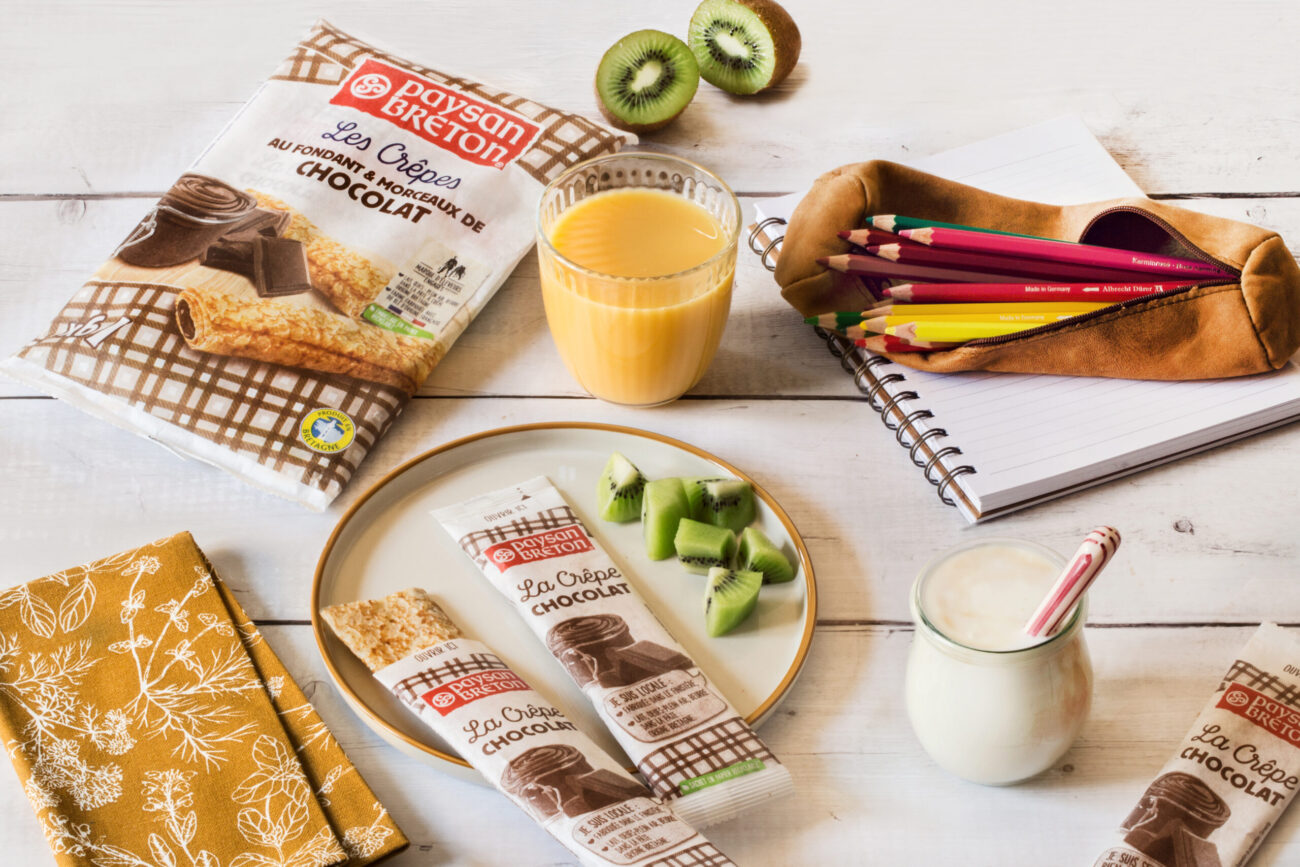
When the French dairy cooperative Laïta wanted to switch to recyclable secondary packaging for one of its most iconic products, the Paysan Breton pancakes, they contacted Walki.
“We were looking for a supplier who was able to improve our current paper film secondary packaging solution. We wanted to make a mono-material that was easier to recycle while not compromising on the technical and mechanical properties of our current packaging,” says Mathieu Boulc’h, Packaging Development & Procurement Manager EVEN / LAITA at Laïta, one of the leading dairy cooperatives in Western France.
Regularly conducted marketing studies done by the cooperative confirms that reducing the use of single-use plastic packaging is increasingly important for customers.
“Regulation such as the AGEC in France (banning single-use plastics to promote a circular economy) and the PPWR in the EU are also pushing us to move progressively towards recyclability,” explains Boulc’h.
Finding a mono-material that ticks all the boxes for secondary packaging is no easy feat.
“For us, there are several criteria that need to be met in order to find the optimal recyclable packaging. There is the economic aspect to consider as the product needs to be affordable. Then we have to take into account that the packaging needs to work on our production lines in our factories. We also need to make sure that the material is suitable for our marketing purposes. On top of this, the packaging needs to comply with both current and future regulations”, explains Boulc’h.
Finding the right paper quality for secondary packaging
The French pancakes, or ‘crêpes’ as they are called, is a popular snack. As one is seldom enough, they are sold as a bundle of six pancakes. The requirements on secondary packaging differ a bit compared to primary packaging. The material for the secondary packaging, the bag that holds the individually packed pancakes inside, needs to be sturdy enough to withstand the weight of the food content. Yet, you need to find the optimal level because if the paper is too thick, you will lose out on the important sealability aspects.

“You need to find the right balance between paper quality, one that offers an excellent print finishing and the right packaging performance,”
Marie Barge
Business Development Manager at Walki
A material that is too thick may also cause problems on the production line.
“Excellent runnability is very important to consider. Making the switch from a paper/plastic complex to paper should not compromise productivity per minute as production efficiency is of course essential” says Barge.
Laïta also wished for the ink used in the printing to be water soluble.
“We use water-based inks and varnishes, to get the best fibre yield out of the recycling process,” explains Barge.
Smooth cooperation from start to finish
Finding the right material was a process that took more than two years, starting from the initial contact from Laïta. A good solid relationship has made for a smooth exploration journey, where the two parties worked on getting everything right.
“The project went very well and Walki met all our needs and expectations. We had a very open dialogue throughout the project and were able to resolve every challenge we faced during the process,” says Boulc’h.