
Membranes for a lower carbon footprint in the construction industry
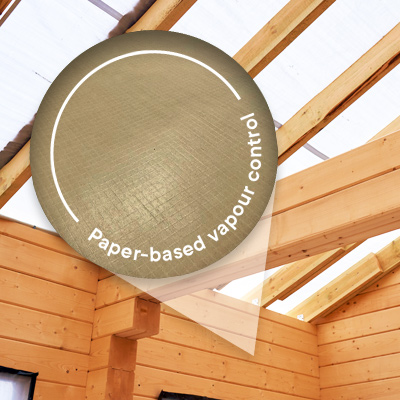
Switching to a paper-based vapor control layer in construction membranes makes all the difference when it comes to lowering carbon footprint.
Buildings and construction sector stands for an almost 40% of annual global CO2 emissions worldwide. As we are bracing ourselves for a harsh winter with inflation and energy crisis, we should take a close look at the materials we use in buildings. Making the right choice can help us save energy and significantly lower the building’s total carbon footprint.
Walki has a long experience from making construction membranes. These are used in roofing underlays and in our walls to help improve the energy efficiency thanks to their air and moisture transfer properties.
The membrane material has traditionally been constructed of a combination of a functional coating layer and non-woven material, which has typically been made from plastics. As this material is fossil-based, it only adds to the construction’s carbon footprint.
“At Walki, we wanted to find a way to lower the total carbon footprint for our customers in the construction industry. The choice of raw material is key, as the materials stand for up to 95% of the membrane’s total carbon footprint”, says Juho Hyytiäinen, Business Line Manager, Construction at Walki.
While the functional layer was kept intact, the innovation team at Walki investigated whether the fossil-based non-woven layer could be replaced with a non-fossil alternative.
“We kept the functional coating but switched the so-called carrier layer to a paper-based material. By doing so, we were able to dramatically lower the membrane’s total carbon footprint.”
The paper-based membrane only concerns vapor control layers at this stage, as the interior maintains the paper integrity and performance.
Customers, retailers and industrial companies producing insulation, have welcomed this new non-fossil solution. Pierrick Girard can discern a sincere concern for climate change throughout the supply chains and in different customer segments.
“This summer we all saw very clear and concrete signs of global warming with fires, drought and temperatures exceeding 40 degrees Celsius. There is a clear change in the mindset, everyone is sincerely looking into lowering their carbon footprint”, says Hyytiäinen, pointing out that it is 15 degrees outside when this interview takes place in France in November.
“It is not normal!”
EU legislators are also pushing the construction industry towards revising the construction product regulation to be more focused on overall sustainability.
“Our customers are increasingly asking for EPD (Environmental Product Declarations) that describe the carbon footprint for the whole product life cycle, from the raw materials through installation and end of life. The International Green Construction Code (IgCC) is a code that include sustainability measure for an entire construction project and its site. Our paper-based membrane fits well in with the IgCC”, concludes Juho Hyytiäienen.